Seven centuries with one family
The land at Dalhousie is linked to Simunus de Ramesia, who followed King David I to Scotland from Huntingdonshire around 1140, and the Ramsay family held the castle from the 12th century until 1900 — close to 700 years under one line. William Ramsay of Dalhousie was significant enough to add his seal to both the Ragman Roll of 1296 and the Declaration of Arbroath in 1320, two of the foundational documents of Scottish medieval history.
A castle built in stages, not at once
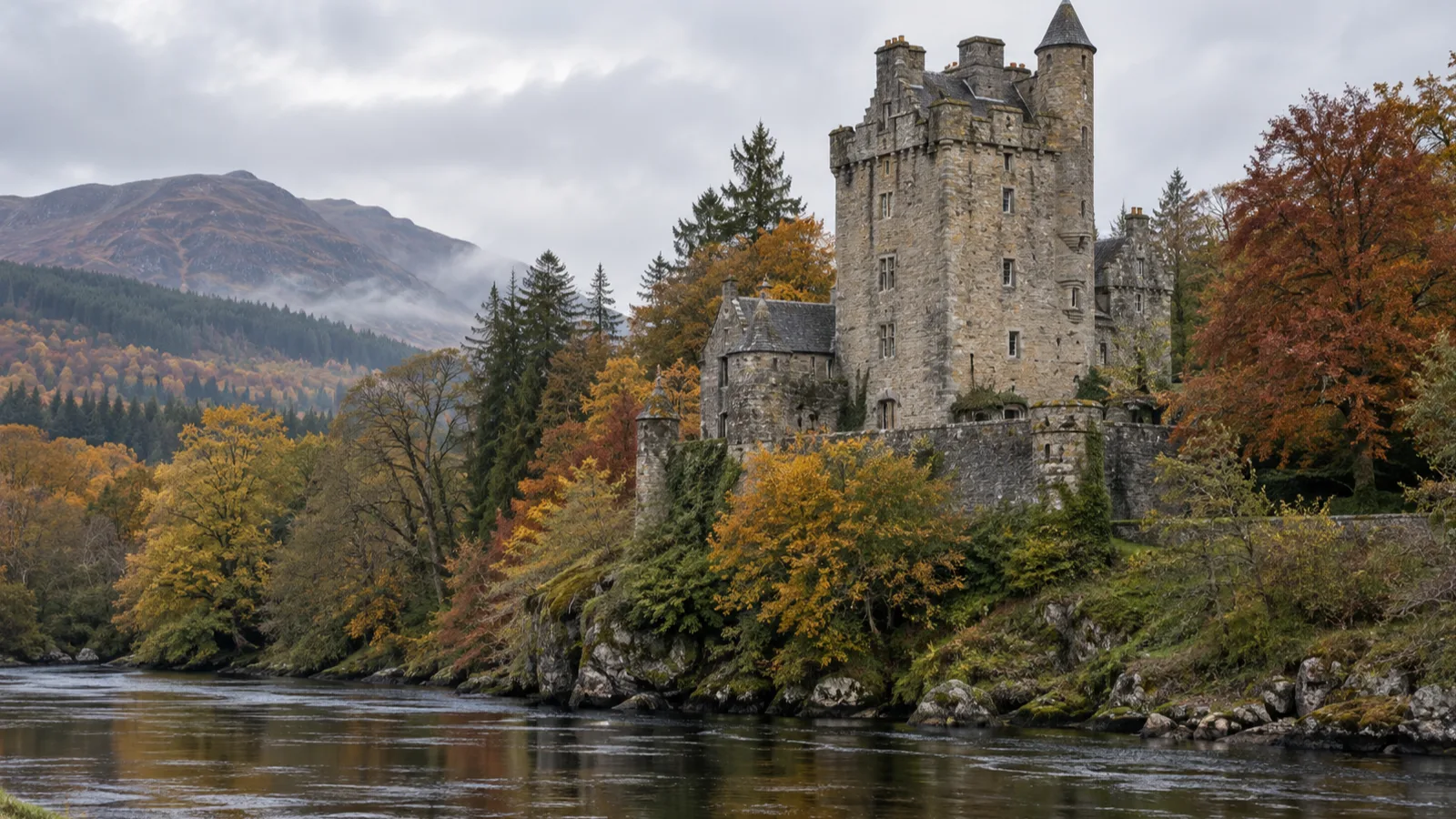
The core of the building is a substantial 15th-century tower house and courtyard, itself incorporating parts of an earlier 13th-century polygonal enclosure castle — meaning the walls you touch today are a genuine patchwork of building campaigns spanning several hundred years. The castle was extended again in the 17th century, with further significant internal work carried out by the architect William Burn in 1820.

From private school to hotel
The Ramsay family's ownership ended in 1900, and the castle passed through several owners across the 20th century, including a period as a private boarding school, before its conversion into a hotel in 1972 — meaning it has now operated as a hotel for over 50 years, longer than several of the other properties on this list.
Getting there
Dalhousie is roughly 30 minutes south of Edinburgh by car, near the village of Bonnyrigg — there's no direct rail station, so a taxi or hire car from Edinburgh is the realistic option, and Edinburgh Airport adds another 20–30 minutes on top of that.
Best time to visit
The wooded riverbank setting along the South Esk is at its most dramatic in autumn colour; winter stays lean into the castle's oldest, coldest-feeling stone sections and its open fires, which suits the building's genuinely medieval character better than a summer visit does.