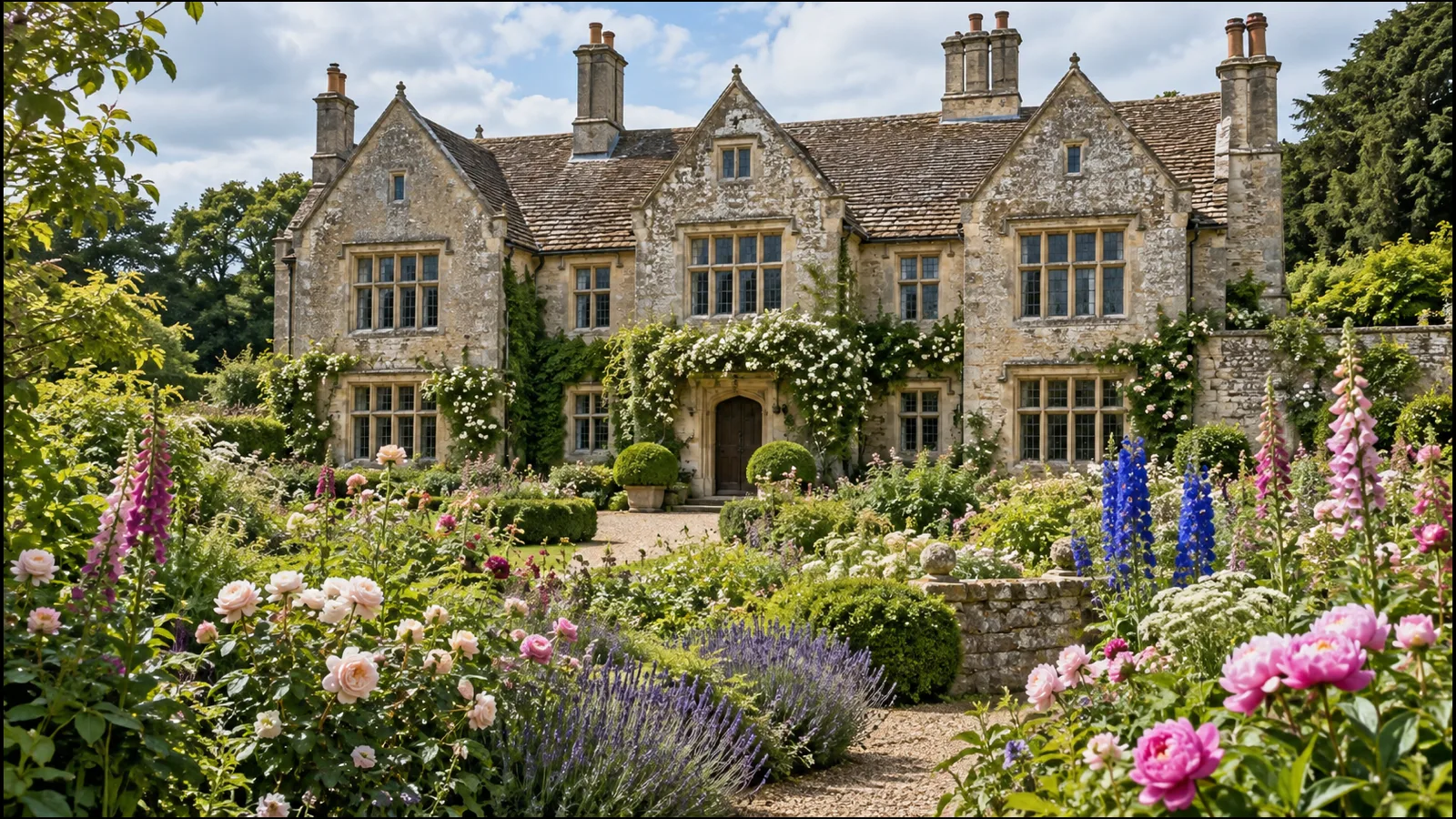
Built by an ironmaster in 1598
Gravetye Manor was built in 1598 by Richard Infield, a local Sussex ironmaster, for himself and his bride Katharine Compton — their initials, "R" and "K", are still carved into the stone over the main entrance. It's a two-storey Elizabethan house, modest by the standards of some grander properties on this list, which is part of why its later history matters more than its origin.
William Robinson and the English natural garden
In 1885, the property was bought by William Robinson, widely considered one of the most influential gardeners in English history. Robinson lived at Gravetye until he died in his nineties in 1935, and it was here that he developed and championed "wild gardening" — informal, naturalistic planting using hardy perennials and self-seeding plants, deliberately rejecting the rigid Victorian bedding-out schemes that dominated at the time. The style he pioneered at Gravetye is now the template for the "English natural garden" copied in gardens worldwide.

The garden today
The 1,000 acres Robinson once owned have shrunk to a working estate of formal and wild garden areas maintained in his original spirit, including a walled kitchen garden that supplies the hotel's own restaurant kitchen — a rare case of a historic garden still functioning as intended rather than as a static museum piece.
Getting there
Gravetye sits near East Grinstead in West Sussex, about an hour south of central London by car or a train to East Grinstead station followed by a short taxi. Gatwick Airport is genuinely close, roughly 20 minutes, making this a realistic first- or last-night stay around a flight.
Best time to visit
Robinson's naturalistic planting style is designed for a long season rather than one peak moment — late spring through the first frosts all show the garden differently, though high summer is when the wild-flower meadow areas are at their fullest.